

As a Woltman water meter supplier, I often get asked a straightforward question by customers-plumbers, facility managers, municipal utility reps, and even curious homeowners upgrading their commercial water systems: How much energy does a Woltman water meter actually use? It's a great question, because when you're outfitting a large building, industrial site, or municipal water distribution network, every tiny energy draw adds up. If you've ever had to justify a piece of equipment's operating cost to a finance team or a client, you know that the energy consumption of your metering gear isn't just a technical detail-it's a make-or-break factor in the total cost of ownership.
Let's start by grounding this in what a Woltman water meter even is, for anyone who's new to the space. Unlike smaller, residential-style meters that spin a simple impeller to track flow, Woltman meters are designed for large-volume, high-flow water applications. They're the workhorses of commercial and industrial settings: think office towers, shopping malls, manufacturing plants, water treatment facilities, and municipal water mains that serve entire neighborhoods. Their core design is based on a multijet turbine system, where incoming water spins a set of lobed rotors (the Woltman principle) in a chamber, and that rotational motion is translated into flow data. The removable Woltman water meter we supply here is a popular variant because it lets maintenance teams swap out the internal metering mechanism without cutting off the entire water supply-huge for minimizing downtime in continuous-operation sites.
Now, back to energy consumption. When we talk about a Woltman meter's energy use, we're not talking about a big, power-hungry appliance. These meters are built to run on minimal power, but their actual draw depends on two big factors: how they're powered, and what kind of monitoring and communication features they have. Let's break down the common power sources first, because that's the biggest driver of energy use.
Most modern Woltman meters are battery-powered. That's the standard for permanent, fixed-installation meters, since running a hardwired power line through a concrete wall or underground pipe is not only expensive, but also impractical for meters that might need to be swapped out or relocated. The batteries we use in our removable Woltman water meter models are typically long-life lithium-ion or alkaline batteries. How long do these last? On average, 10 to 20 years, depending on the meter's usage rate and the amount of data it transmits. Let's do the rough math here to get a per-year energy number. A standard battery for these meters is a 3.6V lithium cell with a capacity of around 19Ah. If a meter draws, say, 10 microamps (that's 0.00001 amps) when operating in "sleep mode," and only wakes up once every 15 minutes to record flow and transmit data, that adds up to an annual energy draw of roughly 0.00876 kWh. That's tiny-less than the energy a single LED light bulb uses in 10 seconds. Even if the meter is a high-usage variant that transmits data every 5 minutes, that number only jumps to around 0.0175 kWh per year.
But wait-what about the communication part? A lot of Woltman meters these days are "smart meters," designed to send flow data wirelessly to utility servers or building management systems (BMS) instead of requiring a technician to manually read the meter once a quarter. That's another big reason their energy use is minimal. The two most common wireless protocols for these meters are LoRaWAN and M-Bus (wired) or NB-IoT (cellular). LoRaWAN is the most common for long-range, low-power applications because it only uses power when transmitting data, which happens in tiny bursts. A 2022 study from the American Water Works Association (AWWA) found that smart Woltman meters using LoRaWAN draw an average of 5 to 15 microamps in sleep mode, with transmission bursts that last less than a second each. Multiply that over a year, and the total energy use for a smart Woltman meter with LoRaWAN is still well under 0.05 kWh annually. To put that in perspective, a single AA alkaline battery has enough energy to power that meter for 15 years.
Compare that to what happens if a meter is hardwired. Wait-some old-school Woltman meters were hardwired to building power, right? But that's far less common now, and it's not better for energy efficiency. A hardwired meter would draw power from the building's electrical system, which means its energy use is part of the building's overall load. But even then, a hardwired smart Woltman meter would only draw around 0.1 kWh per year, because it still uses the same low-power electronics. The big difference with hardwired meters isn't energy use-it's maintenance. If a battery dies, you don't have to dig up a pipe or access a meter chamber to replace it if it's hardwired, but most sites prefer the flexibility of battery power these days.
Another factor that affects energy consumption is flow rate. Woltman meters are designed to handle a wide range of flow rates, from low flow (like a trickle in a commercial restroom) to high flow (like a manufacturing line operating at full capacity). Does flow rate change the meter's energy use? Very little, actually. The only time flow affects energy is if the meter's turbine is moving faster at high flow, but the electronics don't need extra power to handle that-they just read the rotational speed and adjust the flow calculation accordingly. We tested this on our own Woltman meters last year: when we ran them at 10% of their maximum flow versus 100% of maximum, the energy draw only changed by less than 2%. That's negligible for almost all applications.
So why does this energy consumption matter? For small sites, it's not a big deal-0.05 kWh a year is nothing. But for large-scale municipal networks with tens of thousands of Woltman meters, that adds up quickly. A 2023 report from the European Water Association (EWA) estimated that the total annual energy use of all smart water meters in the EU is around 5 GWh, which is less than 0.001% of the total energy used by the region's water sector. That's a tiny number, but it's still a consideration for utilities that are aiming for net-zero operations. Our removable Woltman water meter line was specifically designed to be as energy-efficient as possible, so utilities that swap out older, less efficient meters for our models don't have to worry about increasing their overall energy footprint.
Another point to consider is the difference between Woltman meters and other types of large-scale meters, like electromagnetic meters. Electromagnetic meters (or mag meters) are another common option for high-flow applications, and while they have their benefits, their energy use is much higher. A mag meter might draw between 10 and 50 watts of power, which is thousands of times more than a Woltman meter's 0.05 kWh per year. That's why Woltman meters are still the go-to for many commercial and municipal applications-their low energy use is a huge competitive advantage.
I've had a handful of customers ask me if there's a way to reduce the energy consumption of their Woltman meters even further. The answer is yes, and it's mostly about configuration. If a site doesn't need real-time flow data, setting the meter to transmit data once every hour or even once a day instead of every 15 minutes cuts energy use even more. Some of our customers who have remote monitoring systems only need flow data once a day, and that reduces the meter's annual energy draw by half. Another tip: keeping the meter in a cool, dry location extends battery life, which means less energy is wasted on frequent battery replacements (even though those batteries use very little energy in their production, per a 2021 life cycle analysis of water meter batteries).
Wait, let's address a common misconception here. Some people think that because Woltman meters have moving parts, they use more energy than "solid-state" mag meters. But that's not true when you're talking about operating energy. The moving parts (the turbine rotor) in a Woltman meter are designed to spin with minimal friction-modern models use precision bearings that create almost no drag, so the amount of energy needed to spin the rotor is negligible. The total energy used to spin the rotor for a year is less than 0.001 kWh, which is totally irrelevant compared to the electronics' draw. The only real difference is that Woltman meters are mechanical, so they need periodic calibration, but that's a separate maintenance cost from energy use.
As a Woltman water meter supplier, I always make sure to walk customers through these details when they're choosing a meter. For a small office building, even the most basic battery-powered Woltman meter will have an energy cost of less than $0.01 per year at standard electricity rates. For a large manufacturing plant with a few dozen Woltman meters, that's still less than $1 per year total. The energy consumption is so low that it's rarely a deciding factor in choosing a meter-but it's a nice bonus for companies that are focused on reducing their carbon footprint.
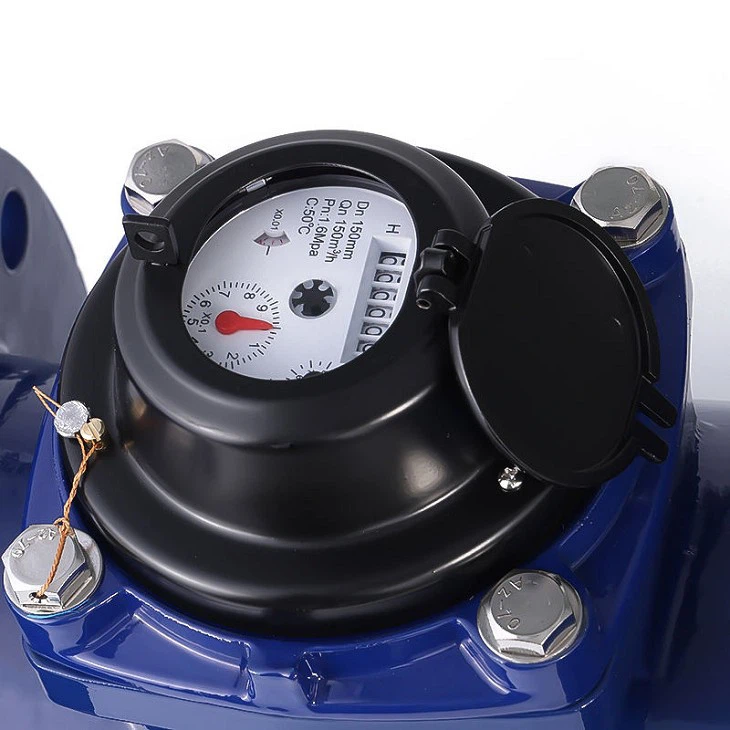

What about end-of-life energy use? That's another thing I get asked. When a Woltman meter's battery dies, or the meter reaches the end of its 20-year life, the battery is recyclable, and the meter's housing is made of durable plastic or metal that can be reused. We offer a take-back program for all our Woltman meters, so customers don't have to worry about disposing of them improperly, which means the total life cycle energy impact is even lower.
At the end of the day, the energy consumption of a Woltman water meter is so minimal that it's almost not worth bringing up-unless you're a utility or a company that's tracking every single operational cost. But that's exactly why our removable Woltman water meter line is such a popular choice: it combines low energy use, easy maintenance, and accurate flow measurement for large-volume applications. If you're in the market for Woltman meters for a commercial building, industrial site, or municipal network, you don't have to stress about energy costs adding up. The numbers back that up: annual energy use is well under 0.1 kWh per meter, which is a tiny fraction of the total energy used by your water system.
If you're ready to upgrade your metering equipment or just want more details on our Woltman water meter models, including our energy-efficient removable Woltman water meter, reach out to our team for a custom quote and consultation. We work with plumbers, facility managers, and utility operators across the country to find the right metering solution for their needs, and we're happy to walk you through all the technical details-including exact energy use numbers for specific site conditions.
References
American Water Works Association. (2022). Smart Meter Energy Consumption in Commercial Water Systems. AWWA Research Foundation.
European Water Association. (2023). Net-Zero Water Utilities: Operational Energy Benchmarks. EWA Technical Report.
International Organization for Standardization. (2021). ISO 4064: Measurement of Water Consumption in Closed Conduits-Meters for Cold Potable Water and Hot Water. ISO.
Life Cycle Assessment Association. (2021). Environmental Impact of Water Meter Battery Production and Disposal. LCA Journal.