

Irrigation Water Meter
Your Professional Irrigation Water Meter Supplier
Ningbo Tongtuo Water Meter Factory, built in 1987, is located in the western suburb of Ningbo, one of the most economically developed cities in the east of China, adjacent to Ningbo Airport, Ningbo Railway Station, and the one of the world's largest seaport, Ningbo Port.Holding the advanced equipments, devoted by experienced water meter engineers and technicians, Tongtuo's manufacturing offerings including the full series of Single jet water meter, Multi jet water meter, Volumetric rotary piston water meter, Woltman water meter, and all kinds of water meter parts and accessories.

Why Choose Us
Our Service
We can truly support our customers with one-station services, from the very beginning of production to the shipping to the destination warehouses. We are always insisting on the idea of quality first, more competitive prices, and customer satisfaction.
Our Factory
With over 35 years experience in water meter manufacturing since 1987, we are professional in producing all kinds of water meters and water meter parts, which the products reach the international level.
Production Market
We Tongtuo started to build long cooperation relationship with overseas' customers.We have been selling qualified water meters and water meter parts to the world-leading water meter factories since then.
Production Equipment
Equipment produced by the company is Injection Molding Machines, CNC Lathes & Milling Machines, Ultrasonic Welding Machines, Automatic Screw Fastening Machines, Automated Assembly Lines, plasma Test Benches.
Advantages of Irrigation Water Meter
|
Advantage Dimension |
Specific Benefits |
|
Precision Measurement |
Error margin as low as ±1% (ultrasonic/electromagnetic vs mechanical ±5%~15%). |
|
Water Saving & Efficiency |
Reduces over-irrigation (proven water saving of 15%~30%). |
|
Data-Driven Decisions |
Real-time irrigation efficiency monitoring (e.g., IE index). |
|
Durability & Adaptability |
Corrosion-resistant 316L stainless steel/titanium alloy. |
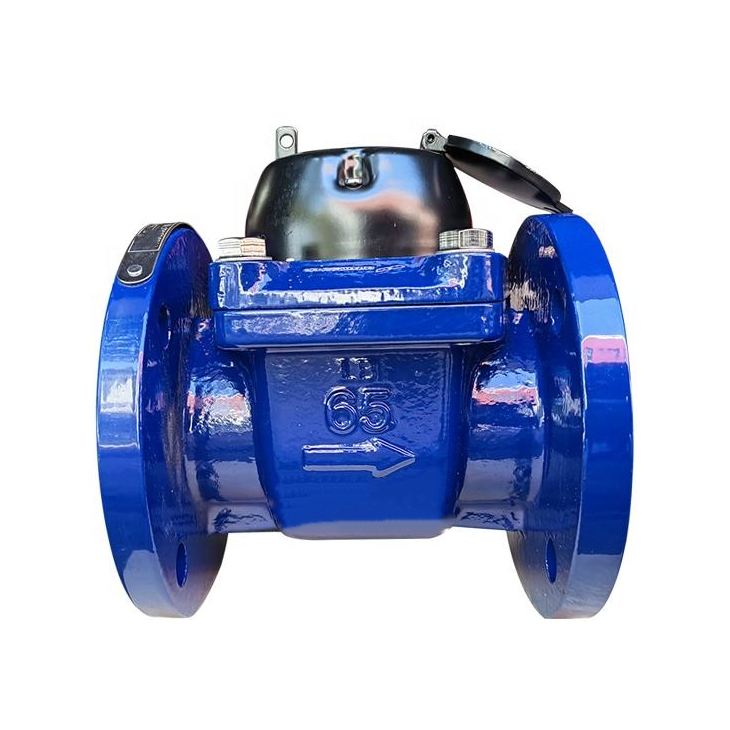
The Role of Irrigation Water Meter
-
Water Conservation
Accurate measurement of water usage helps in implementing conservation practices, ensuring that water resources are used efficiently.
-
Cost Management
By monitoring water consumption, farmers can better manage their water-related expenses, leading to significant cost savings.
-
Regulatory Compliance
Many regions require farmers to monitor their water usage to comply with local regulations, making irrigation water meters essential for legal adherence.
-
Data-Driven Decisions
The data collected from meters allows farmers to make informed decisions about irrigation schedules and crop management.
Specification
|
Parameter |
Specification |
|
Model Series |
LXLC-50 to LXLC-500 |
|
Type |
Mechanical Irrigation Water Meter |
|
Size Range |
DN50-DN500 (2" to 20") |
|
Accuracy Class |
Class B (ISO 4064) |
|
Pulse Output |
1000L/pulse (optional) |
|
Max Pressure |
1.6MPa (PN16) |
|
Temperature Range |
0.1°C-50°C (Cold)) |
|
Connection Type |
Flanged (ANSI/DIN standard) |
Features of Irrigation Water Meters
Specifically Designed for Large Pipelines
These meters are specifically engineered for large-diameter pipelines. Their well-structured design allows for high flow capacity and minimal pressure loss.
Robust and Durable Construction
The construction of irrigation water meters is robust, ensuring durability over time, and making them significantly more resilient than standard water meters.
Wide Measurement Range
They offer a wide measurement range, ensuring stable performance and reliable measurements under various conditions.
Replaceable Measuring Components
These meters come with replaceable measuring components, enhancing their lifespan and providing strong pollution resistance, making them suitable for lower-quality water sources.
Protective Measures
Additionally, protective covers can be installed to prevent damage and tampering with the meter, ensuring its proper functioning.
Magnetic Pre-Filter
A magnetic pre-filter can also be added to eliminate large particles and metal debris, further improving the effectiveness of the water meter.
Operating Principles of Irrigation Water Meter
|
Type |
Operating Principle |
Applicable Scenarios |
|
Mechanical Water Meter |
Driven by water flow to rotate a turbine or piston; mechanical gears convert rotations into volume (L/m³). |
Low-cost, clean water, low-pressure irrigation systems. |
|
Ultrasonic Water Meter |
Measures flow velocity using the time difference of ultrasonic signals in upstream and downstream directions; no moving parts, resistant to impurities. |
High-accuracy needs, water containing silt/algae. |
|
Electromagnetic Water Meter |
Applies Faraday’s law of electromagnetic induction, measuring electromotive force from water cutting across a magnetic field. |
Large-diameter, high-flow irrigation systems. |
|
Smart IoT Water Meter |
Integrates sensors (flow, pressure, temperature) with wireless communication modules (LoRaWAN/NB-IoT) for real-time data upload to cloud platforms. |
Precision agriculture, remote monitoring, automated irrigation. |
Types of Irrigation Water Meter
Mechanical Irrigation Water Meters
Operate using moving parts, typically a turbine or a gear mechanism. As water flows through the meter, it causes the turbine to spin.
Ultrasonic Irrigation Water Meters
Use sound waves to measure water flow. They emit ultrasonic pulses that travel through the water. By measuring the time it takes for these sound waves to travel upstream and downstream, the meter calculates the flow velocity.
Electromagnetic Irrigation Water Meters
Function based on Faraday’s law of electromagnetic induction. As conductive water flows through a magnetic field created by the meter, it induces a voltage that is proportional to the flow velocity. The meter measures this induced voltage and, using the known cross-sectional area of the pipe calculates the flow rate.
Applications of Irrigation Water Meter
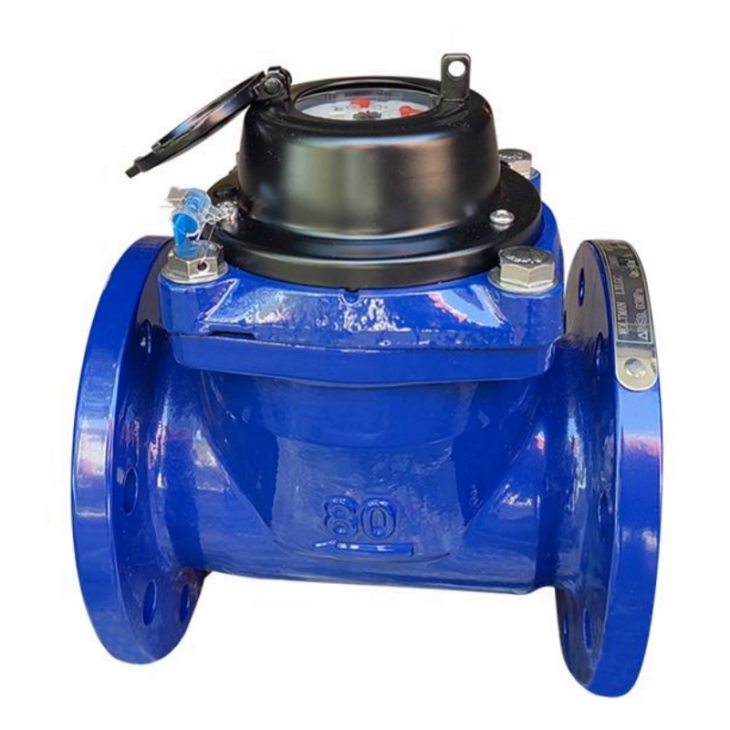
Agricultural Fields
To monitor water usage for crops.
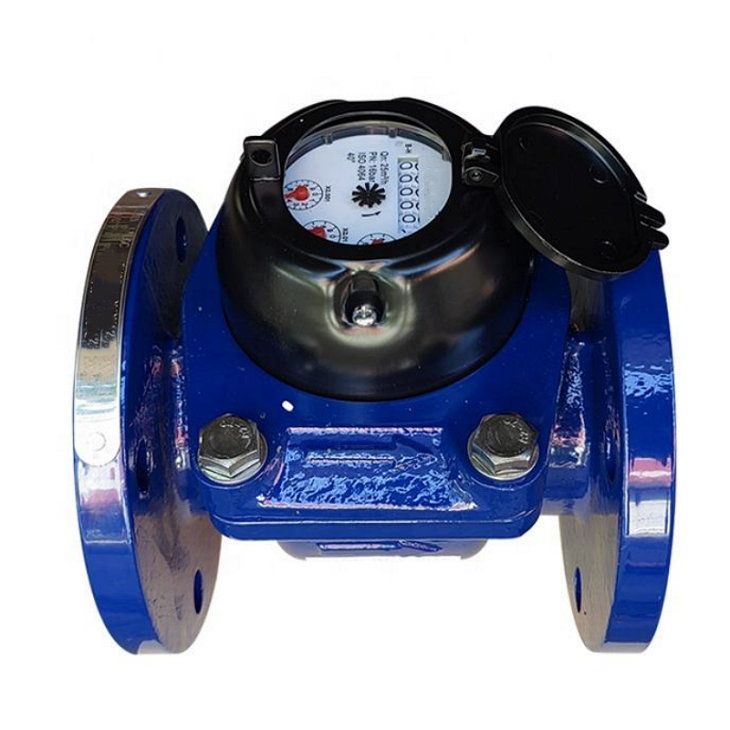
Gardens and Lawns
To optimize watering schedules.
Golf Courses and Parks
To maintain lush landscapes efficiently.
Important Considerations for Using Irrigation Water Meters
Regular Inspections: Due to the complex and variable conditions in agricultural fields—such as wind, dust, and pests—it’s essential to regularly check the meter’s condition. Farmers should inspect the meter at least quarterly for any blockages, damage, or unusual readings, and promptly clean debris or repair/replace damaged parts.
Plan Irrigation Timing Wisely: Schedule irrigation based on the crop growth cycle and soil moisture levels. This ensures that crops receive adequate water while avoiding waste of resources.
Protect Against Freezing: In colder regions or during winter, measures should be taken to prevent the meter from freezing and cracking. Wrapping the meter with insulating materials and keeping the surrounding area dry can help maintain its functionality in low temperatures.
Adopt Water-Saving Irrigation Techniques: With advancements in technology, methods such as drip irrigation and spray irrigation are becoming increasingly popular. These techniques significantly improve irrigation efficiency and reduce waste by allowing precise water control. Farmers are encouraged to adopt these water-saving technologies and consider using smart water meters for remote monitoring and management, leading to smarter and more precise irrigation practices.
FAQ
As one of the most professional irrigation water meter manufacturers and suppliers in China, we're featured by quality products and low price. Please rest assured to buy customized irrigation water meter made in China here from our factory.
wireless irrigation flow meter, sprinkler system meter, main meter and submeter