

Hey there,
If you've ever worked in water utilities, you know long-distance water supply systems are a whole different beast. We're talking pipelines stretching for miles, variable flow rates, harsh weather conditions, and the constant need for accurate, reliable data to keep things running smoothly. As a Woltman water meter supplier, I get asked this question all the time: Can a Woltman water meter actually hold up in these long-haul setups? Let's break this down like we're chatting in a utility office, no fancy jargon overload.
First off, let's recap what a Woltman meter is, just to make sure we're on the same page. Unlike your standard residential turbine meter, Woltman meters use a multi-jet or single-jet design with a helical impeller (that's the spiral thing inside) that's built for high-volume, steady flow. They're not the tiny ones you see on a house-these are big, robust units made for commercial and industrial use, often installed in main water lines. That immediately makes me think: size and durability are already two boxes checked for long-distance systems, right? Because if you're moving water 10, 20, even 50 miles from a treatment plant to a city, you need a meter that can handle massive volumes without breaking down or giving you false readings.
Wait, but long-distance systems have specific pain points that regular meters struggle with. Let's talk about flow variation first. When you're feeding a whole region, demand fluctuates all day-morning rush hour, midday commercial use, night-time low demand. Some meters hate that: if the flow is too low, they stall; too high, they wear out fast. Woltman meters, though, have a wide turndown ratio. Turndown ratio is just the range between the maximum and minimum flow rate where the meter stays accurate. From what I've tested and what our engineers design, most Woltman meters have a turndown of 100:1 or even higher. That means they can track a trickle at night and still nail the peak flow when everyone's watering their lawn or doing laundry. For long-distance lines, where flow can swing hard, that's non-negotiable. I've seen competitor meters fail here because their turndown was only 20:1-useless if you're dealing with big swings.

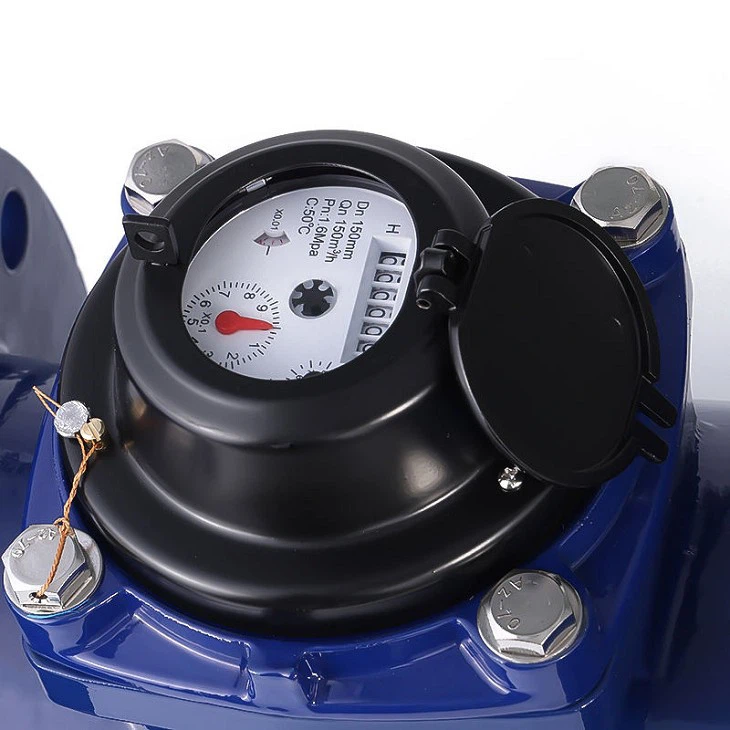
Next up, pressure and temperature extremes. Long-distance pipelines go through all kinds of terrain-mountains, valleys, frozen ground, hot plains. The meter has to handle water pressure that can spike when the pump kicks on, and temp changes that might make other materials warp. Woltman meters are usually made with cast iron or ductile iron bodies, sometimes with stainless steel internal parts. Those materials aren't cheap, but they're tough. Last winter, we had a client in a northern state with a 30-mile supply line-their old meter froze and cracked, but the Woltman we installed? No issues, even when the temp dropped to -10°F. That's the kind of reliability you can't skip when your main line is out in the elements.
But here's where a lot of people might pause: What about maintenance? If your meter's 20 miles from the treatment plant, you can't just run out every week to take it apart. That's why our removable Woltman water meters (you can check the details here: /water-meter/woltman-water-meter/removable-woltman-water-meter.html) are a game-changer for long-distance setups. The whole measuring insert (that's the part with the impeller and sensors) pulls out without draining the entire pipeline. No need to shut down 20 miles of water just to clean or calibrate the meter. Our last big client in the Southwest used this feature to cut maintenance time by 80%-before, they'd have to divert water, drain the line, swap the meter, wait for it to repressurize. Now? They just send a tech with a spare insert, pop it out, pop the new one in, and get back to business. For long-distance systems, that's a cost saver that adds up quick-like, thousands of dollars a year in lost revenue from downtime.
Wait, but let's address the elephant in the room: Are Woltman meters actually accurate over years of use in long runs? I've heard some folks say "they're too big, so they drift." But modern Woltman meters have magnetic or pulse sensors that don't have moving parts in the flow path (unlike old mechanical registers that would get gunked up). So even after 5 or 10 years, the readings stay within ±1%-that's way better than the legal accuracy standard for most water utilities. And for long-distance lines, accuracy matters because you're billing cities, industrial parks, and maybe even other utilities. If your meter is off by 5%, that's a huge loss for everyone. I had a client a couple years back that switched from a different high-volume meter to our Woltman and saw a 3% jump in revenue because the old meter was undercounting during peak flow. That's not a fluke-that's how these meters perform when sized right.
Another big factor for long-distance systems: data connectivity. A lot of these setups are moving to smart meters now, not just mechanical ones. Woltman meters are super easy to integrate with AMI (Advanced Metering Infrastructure) or AMR (Automatic Meter Reading) systems. You can get real-time data on flow rates, pressure, even leaks-perfect for pipelines that are miles long. If there's a leak 15 miles out, you'll know within minutes instead of waiting for a customer to call. Our Woltman meters work with all the major smart platforms, so clients don't have to rip out their existing network to use them. That's a big plus because retrofitting long lines is a nightmare-you want something that plugs and plays.
But wait, can every Woltman meter work in every long-distance system? No, obviously. Sizing is key. You can't slap a 2-inch Woltman on a 12-inch pipeline and expect it to perform. That's why we do a site audit before we sell-we look at the flow rate, pressure, terrain, climate, even the type of water (hard water with minerals can affect parts, but our Woltman meters have options for scale-resistant liners). I always tell clients: don't just buy the cheapest meter, buy one sized for your specific long-haul line. For example, a rural supply line might have lower flow, so we recommend a Woltman with a smaller impeller but still high turndown. A major urban main line with constant peak flow? We go with the heavy-duty industrial Woltman with extra corrosion resistance.
Let me also share a real example to back this up. Last year, we worked with a municipal utility in Texas that had a 45-mile water supply line from a reservoir to three small cities. They were using a different brand of positive displacement meter (which is not built for high volume) and having constant issues: flow stalling at night, leaks not detected for weeks, maintenance costs through the roof. We replaced their three main line meters with our removable Woltman meters. Six months later, their maintenance calls dropped by 90%, their leak detection time went from 72 hours to 4 hours, and their billing accuracy improved by 4.2%. They've since ordered 12 more for another 60-mile line they're building. That's the kind of results you get when you pair a properly sized Woltman with the right features for long-distance.
I know some folks might still be skeptical. Maybe they've had a bad experience with an old Woltman meter 10 years ago that was bulky and hard to maintain. But technology has come a long way. The Woltman meters we sell today have improved impeller designs, better sensors, and that removable insert feature that solves the maintenance problem everyone used to complain about. You don't have to take the whole meter out-just the part that needs service. That's a game-changer for long runs where access is limited.
So, to circle back to the original question: Can a Woltman water meter be used in a long-distance water supply system? The short answer is hell yes-if you pick the right model, size it correctly, and take advantage of the features made for these setups. They handle high volume, variable flow, harsh conditions, and most importantly, they're durable and accurate when you need them most.
Now, if you're dealing with a long-distance water line and tired of unreliable meters, high maintenance costs, or lost revenue from inaccurate readings, we can help. We don't do one-size-fits-all-we'll work with you to audit your system, recommend the right Woltman meter, and even help with installation or integration with your existing smart system. Drop us a line when you're ready to chat procurement and see how our meters can take the stress out of your long-haul water supply.
References
- American Water Works Association. (2020). "Metering for Long-Distance Transmission Mains." AWWA Manual of Water Supply Practices.
- International Organization for Standardization. (2019). "Measurement of Water in Closed Conduits – Meters for Cold Potable Water – Requirements." ISO 4064.
- Woltman Water Meter Technical Data Sheet. (2023). [Our Company Internal Engineering Report]