

As a supplier of Removable Woltman Water Meters, I'm often asked about the communication protocols of these smart meters. In this blog post, I'll dive into the details of what communication protocols are used in Removable Woltman Water Meters and why they matter.
Understanding Removable Woltman Water Meters
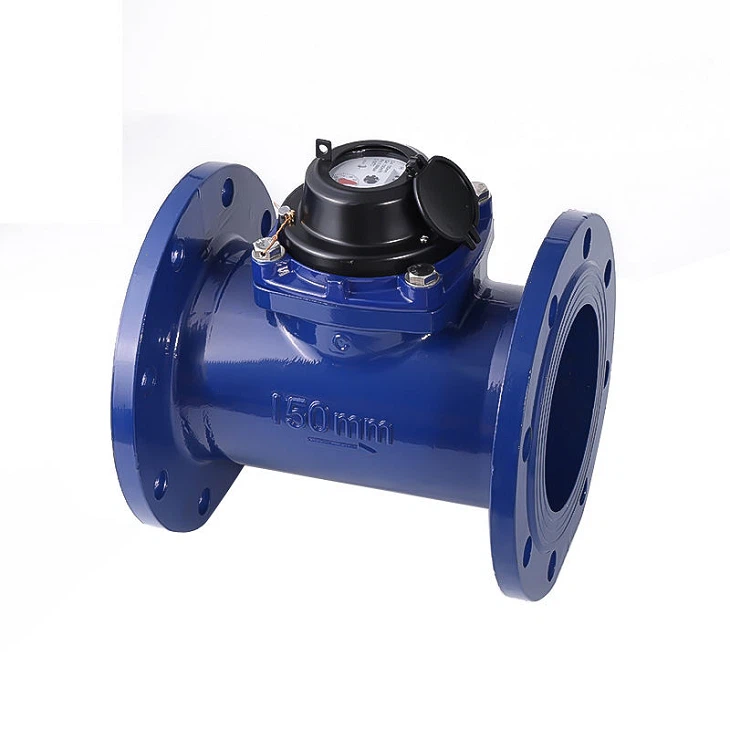
Before we discuss the communication protocols, let's briefly understand what Removable Woltman Water Meters are. A Removable Woltman Water Meter is a type of water flow meter that is designed to measure the volume of water flowing through a pipe. It is called "removable" because it can be easily removed from the pipeline for maintenance or replacement without disrupting the water supply. These meters are commonly used in large - scale water distribution systems, industrial applications, and commercial buildings where accurate water flow measurement is crucial.
Importance of Communication Protocols in Smart Removable Woltman Water Meters
In the era of the Internet of Things (IoT), smart meters have become increasingly popular. A smart Removable Woltman Water Meter is equipped with sensors and communication capabilities that allow it to transmit data about water consumption, flow rate, and other relevant parameters to a central monitoring system. Communication protocols play a vital role in ensuring that this data transfer is reliable, efficient, and secure.
Common Communication Protocols for Removable Woltman Water Meters
Modbus
Modbus is one of the most widely used communication protocols in the industrial automation and metering industry. It is an open - source protocol that allows devices to communicate over a serial or Ethernet network. In the context of Removable Woltman Water Meters, Modbus enables the meter to send data such as water flow rate, total volume, and status information to a Modbus - compatible master device, such as a data logger or a supervisory control and data acquisition (SCADA) system.
The advantage of using Modbus is its simplicity and wide acceptance. It is easy to implement and can be integrated with a variety of devices. However, Modbus has some limitations, such as limited security features and relatively slow data transfer rates compared to some other protocols.
M - BUS (Meter - Bus)
M - BUS is a protocol specifically designed for the communication between meters and data collection systems. It is commonly used in the field of utility metering, including water, gas, and electricity meters. M - BUS operates over a two - wire cable, which makes it cost - effective and easy to install.
In a Removable Woltman Water Meter, M - BUS allows the meter to communicate with a central M - BUS master unit. The master unit can then collect data from multiple meters and transmit it to a higher - level management system. M - BUS has good reliability and is suitable for long - distance communication, making it a popular choice for large - scale water metering projects.
LoRaWAN
LoRaWAN (Long Range Wide Area Network) is a low - power, wide - area network (LPWAN) protocol that is designed for IoT applications. It offers long - range communication capabilities, with a range of up to several kilometers in rural areas. LoRaWAN operates in the unlicensed radio frequency bands, which makes it cost - effective for large - scale deployments.
For Removable Woltman Water Meters, LoRaWAN provides a convenient way to transmit data wirelessly over long distances. This is particularly useful in applications where it is difficult or expensive to install wired communication infrastructure, such as in remote water distribution networks. However, LoRaWAN has relatively low data transfer rates, which may limit its use in applications that require high - frequency data updates.
NB - IoT (Narrowband Internet of Things)
NB - IoT is another LPWAN protocol that is designed for IoT devices. It is based on the existing cellular network infrastructure, which means it can leverage the widespread coverage of mobile networks. NB - IoT offers low - power consumption, long - range communication, and support for a large number of devices.
In the case of Removable Woltman Water Meters, NB - IoT allows the meters to communicate with a cloud - based server or a central monitoring system using the cellular network. This provides a reliable and secure way to transmit data, especially in urban areas where cellular coverage is strong. However, the use of NB - IoT may incur additional costs associated with the cellular network subscription.
Factors Influencing the Choice of Communication Protocol
When choosing a communication protocol for a Removable Woltman Water Meter, several factors need to be considered:
Application Requirements
The specific requirements of the application play a crucial role in determining the appropriate communication protocol. For example, if the meter is installed in a remote area with no wired infrastructure, a wireless protocol such as LoRaWAN or NB - IoT may be more suitable. On the other hand, if the meter needs to be integrated with an existing industrial automation system, Modbus may be the preferred choice.
Data Transfer Rate
The required data transfer rate depends on how frequently the meter needs to transmit data. If real - time data is required, a protocol with a higher data transfer rate, such as Ethernet - based Modbus, may be necessary. However, if less frequent data updates are sufficient, a protocol with lower data transfer rates, such as LoRaWAN, may be adequate.
Cost
Cost is an important consideration, especially for large - scale projects. Wired protocols such as Modbus and M - BUS may require the installation of cables, which can be expensive, especially in large areas. Wireless protocols such as LoRaWAN and NB - IoT may have lower installation costs but may incur additional costs for network infrastructure or subscription fees.
Security
Data security is a critical issue, especially when dealing with sensitive information such as water consumption data. Some protocols, such as Modbus, have limited security features, while others, such as NB - IoT, offer more advanced security mechanisms. It is important to choose a protocol that provides adequate security for the specific application.

Our Offerings as a Removable Woltman Water Meter Supplier
As a leading supplier of Removable Woltman Water Meters, we understand the importance of choosing the right communication protocol for our customers' needs. We offer a range of smart meters that support different communication protocols, including Modbus, M - BUS, LoRaWAN, and NB - IoT.
Our meters are designed with high - quality sensors and reliable communication modules to ensure accurate data collection and transmission. We also provide comprehensive technical support and after - sales service to help our customers integrate the meters into their existing systems and troubleshoot any issues that may arise.
Contact Us for Procurement and Discussion
If you are interested in purchasing Removable Woltman Water Meters or have any questions about the communication protocols, we encourage you to contact us. Our team of experts is ready to assist you in choosing the most suitable meter and communication protocol for your specific application. We can also provide detailed product information, pricing, and technical specifications to help you make an informed decision.
References
- "Industrial Communication Technology Handbook" by Peter Harms
- "The Internet of Things: A Hands - on Approach" by Mohit P. Tahiliani
- "M - BUS Protocol Specification" by the European Committee for Standardization (CEN)