

Can a single jet water meter be used in a water supply system with variable flow rates?
As a supplier of single jet water meters, I often encounter inquiries from customers regarding the suitability of our products in water supply systems with variable flow rates. This blog post aims to delve into this topic, providing a comprehensive analysis of whether single jet water meters can effectively function in such environments.
Understanding Single Jet Water Meters
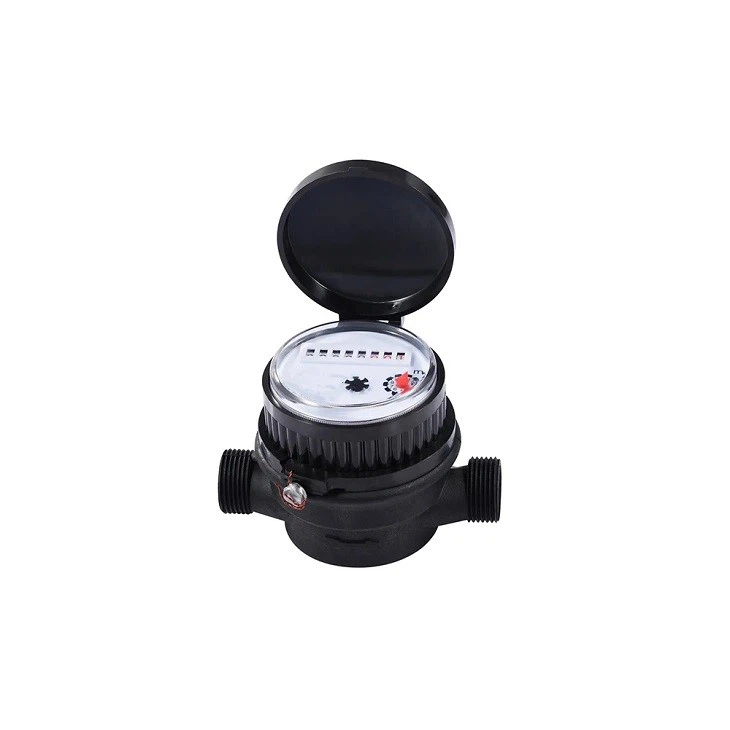
Single jet water meters are a type of positive displacement meter that measures the volume of water passing through a pipe. They operate on the principle of a single jet of water striking a rotor, causing it to rotate. The rotation of the rotor is then translated into a measurement of the water volume. These meters are known for their simplicity, reliability, and cost - effectiveness, making them a popular choice in many water supply applications.
Single jet water meters come in various materials and designs to suit different needs. For instance, we offer Brass Single Jet Water Meter, which is highly durable and resistant to corrosion, making it suitable for long - term use in various water quality conditions. Our Plastic Single Jet Water Meter is lightweight and cost - efficient, ideal for applications where weight and budget are concerns. Additionally, we have Russian Market Single Jet Water Meter, which is specifically designed to meet the requirements of the Russian market, taking into account local water supply characteristics and standards.

Variable Flow Rates in Water Supply Systems
Water supply systems often experience variable flow rates due to a variety of factors. Residential areas may see fluctuations in water demand throughout the day, with peak usage during morning and evening hours when people are using water for bathing, cooking, and cleaning. Industrial facilities may also have variable flow rates depending on their production processes, which could involve intermittent water use for cooling, washing, or manufacturing operations.
In addition, seasonal changes can affect water flow rates. For example, in the summer, there may be increased demand for outdoor watering, leading to higher flow rates in the water supply system. These variable flow rates pose a challenge for water meters, as they need to accurately measure water consumption across a wide range of flow conditions.
Performance of Single Jet Water Meters in Variable Flow Rate Systems
Single jet water meters have certain characteristics that make them suitable for variable flow rate systems to a certain extent.
Accuracy at Different Flow Rates
Single jet water meters are designed to provide accurate measurements within a specified flow range. Most single jet water meters have a relatively wide turndown ratio, which is the ratio of the maximum flow rate to the minimum flow rate at which the meter can accurately measure water. For example, a typical single jet water meter may have a turndown ratio of 100:1. This means that it can accurately measure water flow from a very low rate (such as a slow drip) to a relatively high rate.
However, it's important to note that the accuracy of single jet water meters may vary at different flow rates. At low flow rates, the meter may be less accurate due to factors such as friction in the moving parts and the sensitivity of the rotor to small changes in water flow. At high flow rates, the meter may also experience some inaccuracies if the flow is too turbulent, which can cause the rotor to spin erratically.
Response to Flow Changes
Single jet water meters can respond relatively quickly to changes in flow rate. The design of the single jet mechanism allows the rotor to start rotating as soon as water begins to flow through the meter. This means that the meter can detect the onset of water use and start measuring consumption promptly. However, in cases where there are rapid and large - scale changes in flow rate, the meter may take a short time to adjust and provide an accurate measurement.
Limitations in Variable Flow Rate Systems
Despite their advantages, single jet water meters do have some limitations in variable flow rate systems. In systems with highly fluctuating and unpredictable flow rates, the accuracy of the meter may be compromised. For example, if there are sudden surges or drops in flow rate, the meter may not be able to keep up, resulting in inaccurate readings.
In addition, single jet water meters are more sensitive to the quality of the water supply. If the water contains debris or sediment, it can affect the operation of the rotor and reduce the accuracy of the meter. In variable flow rate systems, the movement of water can stir up sediment, increasing the risk of meter fouling.
Mitigating the Limitations
To overcome the limitations of single jet water meters in variable flow rate systems, several measures can be taken.
Proper Installation
Proper installation of the single jet water meter is crucial. It should be installed in a location where the water flow is relatively stable and free from turbulence. A straight section of pipe upstream and downstream of the meter is recommended to ensure a smooth flow of water. This can help improve the accuracy of the meter, especially in variable flow rate systems.
Regular Maintenance
Regular maintenance of the single jet water meter is essential to ensure its accurate operation. This includes cleaning the meter to remove any debris or sediment that may have accumulated over time. Periodic calibration of the meter can also help to maintain its accuracy, especially if the meter is used in a system with highly variable flow rates.
Complementary Measurement Devices
In some cases, using complementary measurement devices can enhance the accuracy of water measurement in variable flow rate systems. For example, a flow conditioner can be installed upstream of the single jet water meter to smooth out the flow and reduce turbulence. Additionally, multiple meters can be used in parallel to cover a wider range of flow rates more accurately.
Conclusion
In conclusion, single jet water meters can be used in water supply systems with variable flow rates, but their performance needs to be carefully considered. They offer several advantages, such as a relatively wide flow range, quick response to flow changes, and cost - effectiveness. However, they also have limitations, particularly in terms of accuracy at extreme flow rates and sensitivity to water quality.
By taking appropriate measures such as proper installation, regular maintenance, and the use of complementary devices, the performance of single jet water meters in variable flow rate systems can be optimized.
If you are considering using single jet water meters in your water supply system with variable flow rates, we invite you to contact us. Our team of experts can provide you with detailed information about our products and help you choose the most suitable single jet water meter for your specific needs. We are committed to providing high - quality water meters and excellent customer service.
References
- ISO 4064:2014, Water meters for cold potable water and hot water - Specification and test methods.
- AWWA M6 Manual, Water Meters - Selection, Installation, Testing, and Maintenance.
- Technical literature from leading water meter manufacturers on single jet water meter performance.