

Hey there! As a supplier of Removable Woltman Water Meters, I often get asked about the starting flow rate of these nifty devices. So, let's dive right in and break it down.
First off, what's a Removable Woltman Water Meter? Well, it's a type of water meter that's super useful for measuring the flow of water in large - scale applications, like in commercial buildings, industrial facilities, or even some municipal water systems. The "removable" part means that it can be easily taken out for maintenance or replacement, which is a huge plus. You can learn more about it Removable Woltman Water Meter.
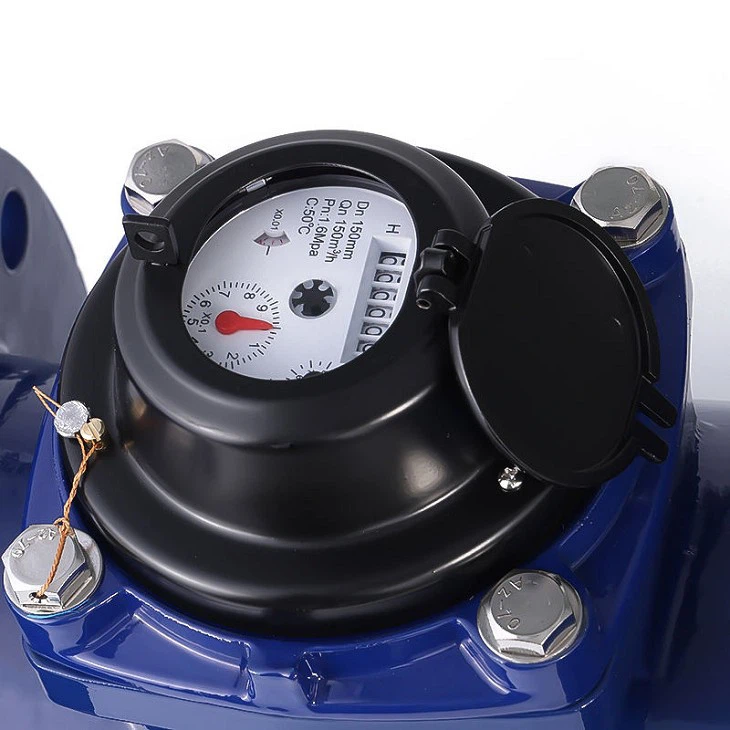

Now, the starting flow rate. This is basically the minimum amount of water flow that the meter needs to start registering the flow accurately. It's an important factor because if the flow rate is below this value, the meter might not work as expected, and you won't get an accurate reading of how much water is actually passing through.
The starting flow rate of a Removable Woltman Water Meter can vary depending on a few different things. One of the main factors is the size of the meter. Generally, smaller meters have a lower starting flow rate compared to larger ones. For example, a small - sized Removable Woltman Water Meter, say with a diameter of 50mm, might have a starting flow rate of around 0.1 - 0.2 cubic meters per hour. This means that when the water flow in the pipe reaches this level, the meter will start to measure the flow.
On the other hand, a larger meter, like one with a 200mm diameter, could have a starting flow rate of around 1 - 2 cubic meters per hour. The reason for this difference is that larger meters are designed to handle higher volumes of water. Their internal components, such as the impellers and sensors, are built to work optimally at higher flow rates. So, they need a certain amount of water flow to get the ball rolling and start providing accurate measurements.
Another factor that affects the starting flow rate is the design and technology of the meter. Some modern Removable Woltman Water Meters are equipped with advanced sensors and precision - engineered components. These meters can often start registering flow at lower rates compared to older or more basic models. For instance, a meter with a high - sensitivity sensor might be able to start measuring flow at 0.05 cubic meters per hour, even if it's a relatively large - sized meter.
The viscosity of the water also plays a role. If the water has a higher viscosity, perhaps due to the presence of certain substances or a lower temperature, it can be more difficult for the meter to start registering the flow. In such cases, the starting flow rate might be slightly higher than normal. For example, in a cold climate where the water is more viscous, a meter that usually has a starting flow rate of 0.1 cubic meters per hour might need a flow of 0.15 cubic meters per hour to start working accurately.
The installation conditions are crucial too. If the meter is installed in a pipe with a lot of bends, elbows, or other obstructions, it can disrupt the flow of water and increase the starting flow rate. The water needs to flow smoothly through the meter for it to start working properly. So, a well - installed meter in a straight and unobstructed pipe will generally have a lower starting flow rate compared to one installed in a more complex piping system.
Now, why does the starting flow rate matter? Well, for one, it affects the accuracy of water measurement. If you're a building owner or an industrial facility manager, you rely on accurate water measurements to manage your water usage and costs. If the meter doesn't start registering flow until the flow rate is relatively high, you might be missing out on measuring small but consistent water usage, which can add up over time.
For water utilities, the starting flow rate is important for billing purposes. They need to ensure that they're accurately measuring the water consumption of their customers. If the starting flow rate is too high, some customers might be under - billed, which can lead to revenue losses for the utility.
As a supplier of Removable Woltman Water Meters, we understand the importance of getting the starting flow rate right. That's why we offer a range of meters with different starting flow rates to suit various applications. Whether you need a meter for a small - scale commercial building or a large industrial plant, we've got you covered.
If you're in the market for a Removable Woltman Water Meter, it's essential to consider the starting flow rate based on your specific needs. Think about the typical flow rates in your water system, the size of the pipes, and the environmental conditions. Our team of experts can help you choose the right meter with the appropriate starting flow rate for your situation.
We're always here to assist you with any questions you might have about our Removable Woltman Water Meters. Whether it's about the starting flow rate, installation, or maintenance, we've got the knowledge and experience to guide you. If you're interested in purchasing our meters or want to have a detailed discussion about your requirements, don't hesitate to reach out. We're eager to start a conversation and help you find the perfect solution for your water - measuring needs.
In conclusion, the starting flow rate of a Removable Woltman Water Meter is a key factor that depends on meter size, design, water viscosity, and installation conditions. By understanding these factors, you can make an informed decision when choosing a meter for your application. And remember, we're just a message away if you need any help or want to start the procurement process.
References
- Water Meter Handbook: A Guide to Selection, Installation, and Maintenance
- Technical Papers on Flow Measurement in Large - Scale Water Systems