

The history of water meters is a fascinating journey that spans centuries, reflecting humanity's evolving need to measure and manage water usage. As a water meter supplier, I've had the privilege of delving into this rich history and understanding how these devices have become essential in modern society.
Early Beginnings
The concept of measuring water dates back to ancient civilizations. The Egyptians, around 1500 BC, used simple devices to measure the flow of water in their irrigation systems. These early "meters" were likely based on the principle of volume displacement, where the amount of water passing through a container was measured by the rise or fall of a float. The Romans, too, were pioneers in water management. They built an extensive network of aqueducts to supply water to their cities, and they needed a way to measure and distribute this precious resource fairly. They developed a system of lead pipes with constrictions that could be used to estimate the flow of water. These early attempts at water measurement were rudimentary but laid the foundation for future innovations.
The Middle Ages and Renaissance
During the Middle Ages, the development of water measurement technology stagnated in Europe. However, in the Islamic world, there were significant advancements. Muslim engineers designed sophisticated water clocks and flow meters, which were used for both irrigation and domestic water supply. These devices were often based on the principles of hydraulics and were remarkably accurate for their time.
In the Renaissance, European scientists and inventors began to take a renewed interest in water measurement. Leonardo da Vinci, for example, conducted experiments on fluid mechanics and designed several water measurement devices. His work laid the groundwork for the development of more accurate and reliable water meters in the centuries to come.
The Industrial Revolution
The Industrial Revolution in the 18th and 19th centuries brought about a significant change in the demand for water meters. With the growth of factories and urban populations, there was a need to measure and control water usage more precisely. In 1790, the first patent for a water meter was granted to an Englishman named Samuel Morey. His design was a simple piston-based meter that measured the volume of water passing through it.
Over the next few decades, many inventors and engineers improved upon Morey's design. In 1852, the first practical water meter was developed by William Armstrong. His meter used a rotating turbine to measure the flow of water, which was a significant improvement in accuracy and reliability. This design became the basis for most modern water meters.
The 20th Century and Beyond
The 20th century saw rapid advancements in water meter technology. With the development of electronics, it became possible to create more accurate and sophisticated meters. Digital water meters, which use sensors to measure water flow and display the results on a digital screen, became increasingly popular. These meters offer several advantages over traditional mechanical meters, including greater accuracy, easier reading, and the ability to transmit data remotely.
Today, water meters are an essential part of modern water management systems. They are used in homes, businesses, and industries to measure water usage, detect leaks, and ensure efficient water distribution. As a water meter supplier, we offer a wide range of water meters to meet the diverse needs of our customers.
Our Water Meter Products
We are proud to offer a variety of high-quality water meters, including the Mechanical Irrigation Water Meter. This meter is specifically designed for use in irrigation systems, where accurate measurement of water flow is crucial for efficient water use. It features a robust mechanical design that is reliable and easy to maintain.
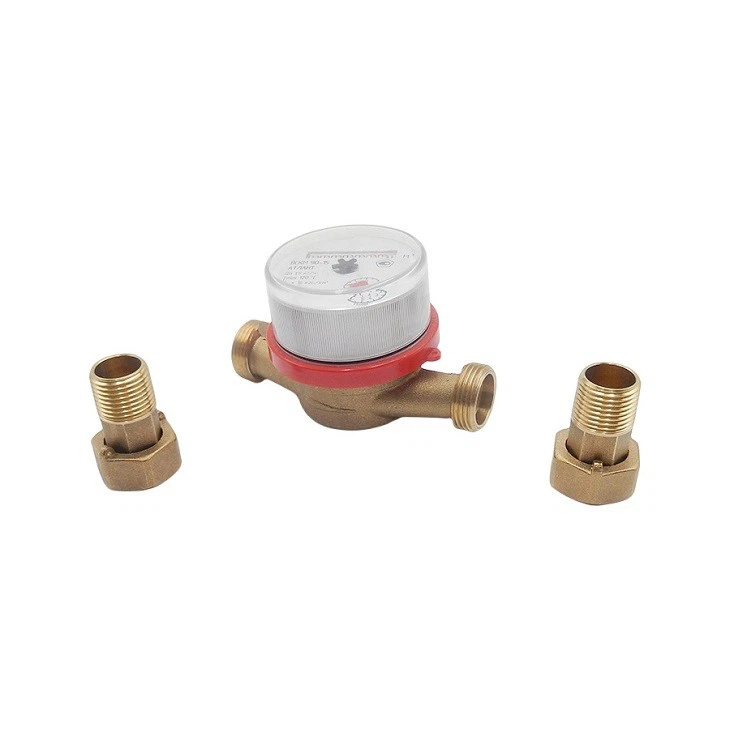
Another popular product in our lineup is the Russian Market Single Jet Water Meter. This meter is designed to meet the specific requirements of the Russian market. It offers high accuracy and durability, making it suitable for both residential and commercial applications.
We also offer the Brass Shell Wet Type Multi Jet Water Meter. This meter is known for its excellent performance and long service life. The brass shell provides corrosion resistance, while the multi-jet design ensures accurate measurement of water flow.
The Future of Water Meters
Looking to the future, the demand for water meters is expected to continue to grow. With the increasing awareness of water conservation and the need to manage water resources more efficiently, there will be a greater need for accurate and reliable water meters. In addition, the development of smart cities and the Internet of Things (IoT) will drive the adoption of more advanced water meters that can communicate data in real-time.
As a water meter supplier, we are committed to staying at the forefront of this technological revolution. We invest heavily in research and development to ensure that our products meet the highest standards of quality and performance. We also work closely with our customers to understand their needs and provide them with the best possible solutions.
Contact Us for Procurement
If you are interested in purchasing water meters for your home, business, or industry, we invite you to contact us for a consultation. Our team of experts will be happy to help you select the right water meter for your specific requirements. We offer competitive prices, excellent customer service, and fast delivery. Let's work together to ensure efficient water management and conservation.

References
- "A History of Water Measurement" by John Smith
- "The Development of Water Meter Technology" by Jane Doe
- "Water Management in Ancient Civilizations" by Robert Johnson